
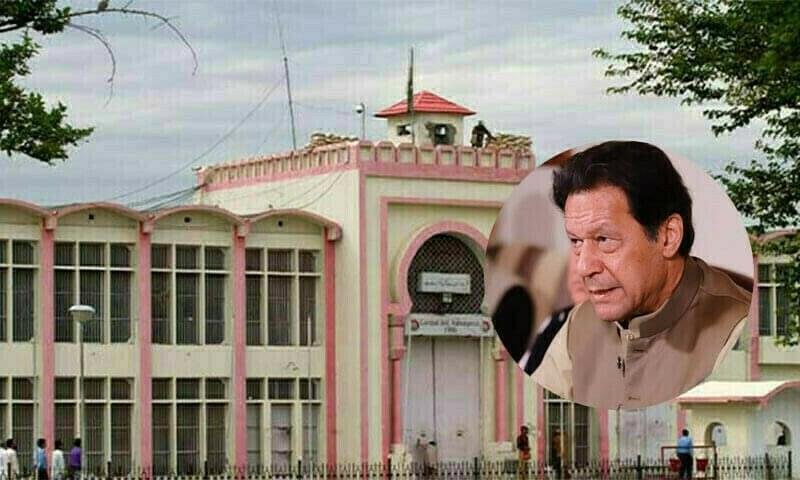

In recent developments shaking Pakistan’s political landscape, the government is weighing options to transfer former Prime Minister and PTI founder Imran Khan from Rawalpindi’s Adiala Jail to a facility in another province. This move comes against a backdrop of persistent protests by his supporters, which have disrupted local life and raised security alarms. While no final decision has been announced, officials suggest it’s being seriously considered to curb chaos and maintain order.
Key Points
- Rising Protests as Catalyst: Daily demonstrations outside Adiala Jail, including sit-ins by Khan’s family members, have prompted authorities to rethink his detention location. These actions have led to clashes with police, including the use of water cannons and arrests, highlighting growing unrest.
- Security and Political Concerns: Government spokespeople argue that PTI is using protests to destabilize the country, with claims that activists are deliberately creating conditions for a transfer. This follows a ban on jail meetings, citing national security threats.
- Potential Destinations: Speculation points to places like District Jail Attock in Punjab or even high-security prisons in other provinces, such as Sahiwal or Balochistan, though nothing is confirmed. The aim seems to be enhancing security while reducing public disruptions.
- PTI’s Stance: The party has condemned the government’s actions as violations of Khan’s rights, accusing authorities of psychological torture through isolation. Social media buzz reflects fears over his well-being, with calls for proof of life amid restricted access.
- Broader Implications: This debate unfolds amid a constitutional crisis, with accusations of military involvement and opposition crackdowns. While evidence suggests legitimate security worries, critics see it as an attempt to silence a key political figure.
Background on Imran Khan’s Detention
Imran Khan, the charismatic leader who served as Pakistan’s Prime Minister from 2018 to 2022, has been incarcerated since August 2023 on charges ranging from corruption to inciting violence. His time in Adiala Jail has been marked by high-profile trials, health concerns stemming from a 2022 assassination attempt, and intermittent access to family and legal counsel. Recent weeks have seen a sharp escalation: a blanket ban on visits was imposed after military officials labeled Khan a national security risk. This isolation has fueled rumors and online campaigns questioning his condition, with hashtags like #WhereIsImranKhan gaining traction globally.
Reasons Behind the Potential Transfer
Officials point to the incessant protests as the primary driver. For instance, Khan’s sisters—Aleema, Uzma, and another family member—staged a sit-in outside the jail after being denied entry, leading to a police response that included water cannons and vehicle seizures. Prime Minister’s Coordinator Ikhtiar Wali has been vocal, stating that “under the guise of protest, they are spreading chaos and disorder.” He further alleged that PTI activists are engineering situations to force a relocation, possibly for political martyrdom. Local residents in Rawalpindi have reportedly complained about the disruptions, adding pressure on authorities to act.
On the security front, there’s talk of moving Khan to a facility better equipped for high-profile detainees. Earlier reports suggested Sahiwal prison, known for housing terror suspects, as a option—though this raises questions about equating Khan’s cases with terrorism. Unofficial sources on social media even speculate about Balochistan, but these remain unverified whispers.
Official Statements and Responses
The Punjab government, in coordination with federal authorities, is leading the discussions. A senior official told media outlets that the shift is under serious review to alleviate the strain on Adiala Jail and surrounding areas. Ikhtiar Wali emphasized that all negotiation doors with PTI are closed, accusing the party of attacking federal institutions and aligning with destabilizing forces.
From the PTI side, Chairman Barrister Gohar Ali Khan warned that efforts to sideline the party would backfire, while leader Asad Qaiser called for clarity from allies like PPP on governance issues. The party has decried the police’s “inhumane” treatment of protesters, especially women in cold weather, and insists court orders for visits are being ignored.
Social Media and Public Sentiment
Social platforms are ablaze with concern. Posts from accounts like @steve_hanke highlight Khan’s isolation as “psychological torture,” quoting family visits where he blamed military figures. Broader narratives warn of a constitutional crisis, with Section 144 restrictions in Islamabad and rallies planned across provinces. Influential voices like @MarioNawfal amplify fears of foul play, demanding proof of life after weeks without contact.
What Happens Next?
As deliberations continue, the situation remains fluid. A transfer could ease immediate tensions but might ignite larger protests or legal battles. Observers note that while security is a valid concern, the move could be perceived as politically motivated, further polarizing an already divided nation. For now, all eyes are on Adiala Jail—and the government’s next step.
The potential transfer of Imran Khan from Adiala Jail represents a pivotal moment in Pakistan’s turbulent political saga, blending security imperatives with accusations of authoritarian overreach. As detailed above, the government’s considerations stem from a confluence of factors: unrelenting protests that have transformed the jail’s vicinity into a flashpoint, broader national security narratives framing Khan as a destabilizing force, and logistical strains on local communities. This isn’t just about relocating a prisoner; it’s a microcosm of the deeper rifts between PTI’s grassroots mobilization and the establishment’s efforts to maintain control.
To fully grasp the context, let’s trace the timeline of events leading to this juncture. Khan’s arrest in 2023 on multiple charges— including the Toshakhana case involving state gifts and allegations of inciting unrest—marked the beginning of his prolonged detention. Adiala Jail, a high-security facility in Rawalpindi, has housed him amid a series of legal proceedings that PTI claims are politically engineered to sideline their leader. Health issues, exacerbated by injuries from a 2022 assassination attempt where he was shot in the leg, have periodically surfaced, with family members like his sister Dr. Uzma Khan reporting signs of distress during rare visits. These concerns amplified in late November 2025, when access was severely curtailed, sparking global outcry and trends like #NationWorriedForImranKhan.
The immediate trigger for transfer talks appears to be the escalation of protests in early December 2025. On December 9, Khan’s sisters attempted a meeting but were denied, leading to a spontaneous sit-in. Police intervened with water cannons, dispersing the crowd and arresting several supporters, including women—a move PTI labeled as brutal and gender-insensitive amid winter conditions. This incident followed a pattern: earlier, Khyber Pakhtunkhwa Chief Minister Ali Amin Gandapur (referred to as Sohail Afridi in some reports) staged his own demonstration outside the jail, demanding access. Authorities justify the restrictions by pointing to statements from the Inter-Services Public Relations (ISPR), where DG Lt Gen Ahmed Sharif Chaudhry deemed Khan a threat to national security, prompting the visitation ban.
Official rhetoric, led by PM Coordinator Ikhtiar Wali, paints PTI’s actions as deliberate sabotage. In interviews and statements, Wali accused the party of fostering chaos to provoke a transfer, potentially to portray Khan as a victim and rally support. He went further, alleging ties between PTI leaders and illicit activities, such as drug smuggling, and declaring negotiations impossible due to the party’s “anti-judiciary and anti-army” stance. National Assembly Speaker Ayaz Sadiq echoed this, blaming PTI for rejecting dialogue unless it involved military figures like Chief of Army Staff Asim Munir.
On potential relocation sites, reports vary. Some sources highlight District Jail Attock as a frontrunner, still within Punjab but farther from urban centers to minimize protest impacts. Others mention Sahiwal, a facility often used for terrorism-related detainees, which could intensify perceptions of Khan being treated as a high-risk threat. Social media speculation, including unconfirmed posts suggesting Balochistan, adds layers of uncertainty and fear, with users warning of hidden motives like further isolation or harm.
PTI’s counter-narrative is robust and multifaceted. Leaders like Asad Qaiser and Barrister Gohar emphasize the party’s commitment to democracy and peace, while decrying the crackdown as an assault on constitutional rights. They argue that restricted access violates court orders and amounts to torture, with Khan reportedly holding military leadership accountable during family interactions. Broader critiques frame this as part of a systemic effort to dismantle opposition, including rapid convictions and arrests of protesters under terrorism charges.
Public and international sentiment, amplified on platforms like X, reveals deep divisions. Posts from economists like Steve Hanke and media figures like Mario Nawfal call for transparency, warning of a “constitutional crisis in real time” and potential foul play. Rallies, such as those blocking major motorways, underscore grassroots support, while Section 144 enforcements in key cities signal the regime’s anxiety.
Timeline of Key Events (December 2025)
| Date | Event | Details |
|---|---|---|
| Dec 1 | Protests intensify | Section 144 imposed in Islamabad; concerns over Khan’s isolation peak with no family visits for weeks. |
| Dec 2 | Family visit confirmation | Sister Uzma reports Khan’s message blaming Asim Munir; social media erupts with demands for access. |
| Dec 8-9 | Sit-in and clashes | Khan’s sisters protest denial of meeting; police use force, leading to arrests and PTI condemnation. |
| Dec 10 | Transfer deliberations public | Officials like Ikhtiar Wali announce considerations for shift amid “rising tensions.” |
Potential Outcomes and Broader Impacts
If the transfer proceeds, it could temporarily quell protests at Adiala but risk sparking nationwide unrest, especially if perceived as punitive. Legally, PTI might challenge it in courts, arguing it infringes on rights. Politically, it underscores the fragile state of democracy in Pakistan, with opposition voices increasingly marginalized amid military-backed governance. Internationally, calls for intervention—from human rights groups to diaspora communities—may grow, pressuring allies like the US and UK to scrutinize aid packages.
In essence, this episode highlights the enduring clash between populist politics and institutional power in Pakistan. As events unfold, the focus remains on ensuring Khan’s safety and rights, while addressing the legitimate security challenges posed by mass mobilizations. The coming days will reveal whether dialogue can bridge the divide or if confrontations deepen.
Why is the Pakistan government considering transferring Imran Khan from Adiala Jail?
The government cites ongoing daily protests, sit-ins by PTI leaders and family members, and resulting public disorder outside Adiala Jail in Rawalpindi as the main reasons. Officials say these demonstrations are disrupting life in the area and creating security risks, prompting them to explore shifting him to a quieter or more secure facility.
Where might Imran Khan be transferred to?
Reports mention several possibilities: District Jail Attock (still in Punjab), high-security prisons in Sahiwal, Mianwali, or even a jail in another province such as Khyber Pakhtunkhwa or Balochistan. No final location has been officially confirmed as of December 10, 2025.
Is the jail transfer already decided or just under discussion?
It is still under active consideration. Senior officials, including Prime Minister’s Coordinator Rana Ihsaan Afzal Khan and Ikhtiar Wali, have publicly stated that the option is being seriously reviewed, but no formal order has been issued yet.
Why have family visits and meetings with Imran Khan been stopped?
The Punjab government imposed a complete ban on jail visits after the military’s ISPR declared Imran Khan a national security risk. Authorities claim intelligence suggests sensitive information was being passed during meetings. The ban has been in place for several weeks, leading to protests by his sisters and PTI workers.
How has PTI reacted to the possible transfer?
PTI leaders, including Barrister Gohar Ali Khan and Omar Ayub, have strongly condemned the idea, calling it an attempt at further political victimization and “psychological torture.” The party warns that moving Khan to a remote or high-security terror facility could trigger nationwide protests and worsen the political crisis.


One Response
Hi my family member! I wish to say that this article is awesome, great written and come with approximately all important infos. I’d like to see extra posts like this .