
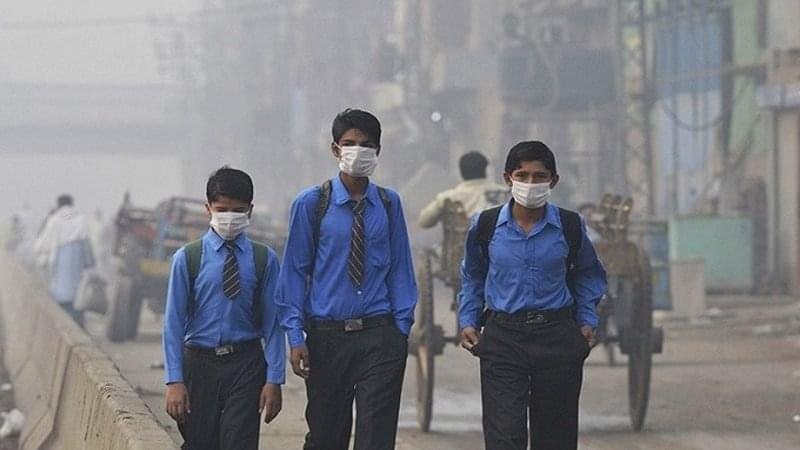

To protect students from the heavy winter smog in Punjab, the provincial government has changed school timings starting today, November 3, 2025. Now, all public and private schools must open at 8:45 AM. If any school breaks this rule, it can be fined from Rs. 5 lakh to Rs. 10 lakh. This new schedule will remain in place until January 31, 2026. The purpose of this change is to reduce early-morning traffic pollution and keep children healthy, as the air quality during winters often becomes very dangerous.
Key Points:
- Policy Overview: As of November 3, 2025, all public and private schools in Punjab, Pakistan, must delay opening until 8:45 AM to reduce morning traffic emissions during peak smog season, a measure effective until January 31, 2026. Research and reports suggest this could lower children’s exposure to hazardous air, where AQI levels in Lahore often exceed 300, linked to respiratory risks.
- Enforcement Details: Violations carry fines from Rs 500,000 to Rs 1 million, with potential closures; this builds on past efforts but introduces harsher penalties amid worsening pollution.
- Potential Challenges: While health benefits seem likely, parents and schools may face scheduling disruptions, highlighting the trade-offs in pollution-prone regions like South Asia.
- Broader Context: Part of Chief Minister Maryam Nawaz’s anti-smog campaign, including industry crackdowns; evidence leans toward positive impacts, but long-term solutions like cleaner farming are needed.
Quick Background
Punjab’s winter smog, driven by crop burning and emissions, has intensified, prompting this health-first policy. It’s a targeted response, not without controversy over daily routines, but supported by experts for vulnerable groups like kids.
Implementation Snapshot
Schools adjust to new hours: single-shift from 8:45 AM to 1:30 PM (Mon-Thu), with Fridays shorter. Double-shifts split mornings and afternoons to ease logistics.
Why It Matters
This could cut absenteeism from illness, though some stakeholders worry about work-family balance. Official monitoring ensures compliance, with public reporting encouraged.
In the haze-choked streets of Lahore and beyond, Punjab’s latest stand against smog feels like a breath of fresh air—or at least a step toward one. On November 2, 2025, the provincial Environment Protection Department dropped a directive that’s already reshaping school bells across the region: no more pre-8:45 AM openings for public or private institutions, starting today, November 3, and running through the smoggiest months until January 31, 2026. Backed by fines that could hit Rs 1 million, this isn’t just a tweak—it’s a full-throated call to action against a pollution crisis that’s turned winter into a public health gauntlet. Drawing from official announcements, expert insights, social media chatter, and on-the-ground reports, this piece weaves together the policy’s nuts and bolts, its roots in a choking environment, stakeholder ripple effects, and what it signals for cleaner tomorrows. We’ll unpack it all, from the revised class schedules to the fines that bite, ensuring you have the full picture on how Punjab is shielding its students while navigating the haze of implementation hurdles.
The Smog Siege: Setting the Scene
Punjab’s air quality woes aren’t subtle—they’re suffocating. This November, Lahore’s Air Quality Index (AQI) has spiked to 300-400, slamming it into “hazardous” territory on global scales, second only to a few global hotspots. The culprits? A toxic cocktail of stubble burning from post-harvest fields, belching factories, clogged roads, and stagnant winter air that pins pollutants at nose level. Kids, with their smaller airways and active playground lungs, bear the brunt: think asthma attacks, itchy eyes, and nagging coughs that sideline learning.
This isn’t Punjab’s first rodeo. Past winters saw similar timing shifts, but 2025’s version amps up the urgency under Chief Minister Maryam Nawaz’s green push. Her administration’s rolled out AQI apps, mask mandates in schools, and shutdowns of over 1,000 polluting units—yet smog persists, visible from satellites as a regional shroud over South Asia. Enter the latest fix: delay school starts to dodge the dawn rush, when cold air traps exhaust like a lid on a pot. Director General of Environment Imran Hamid Shaikh called it a “necessary shield” for the province’s 20 million-plus students, tying it to Section 6(1)(t) of the Punjab Environmental Protection Act, 1997. Social media’s lit up too—posts from outlets like Bloom Pakistan and Khushhal Pak hail it as a win for CM Nawaz’s anti-smog drive, though some users gripe about the “logistical nightmare.”
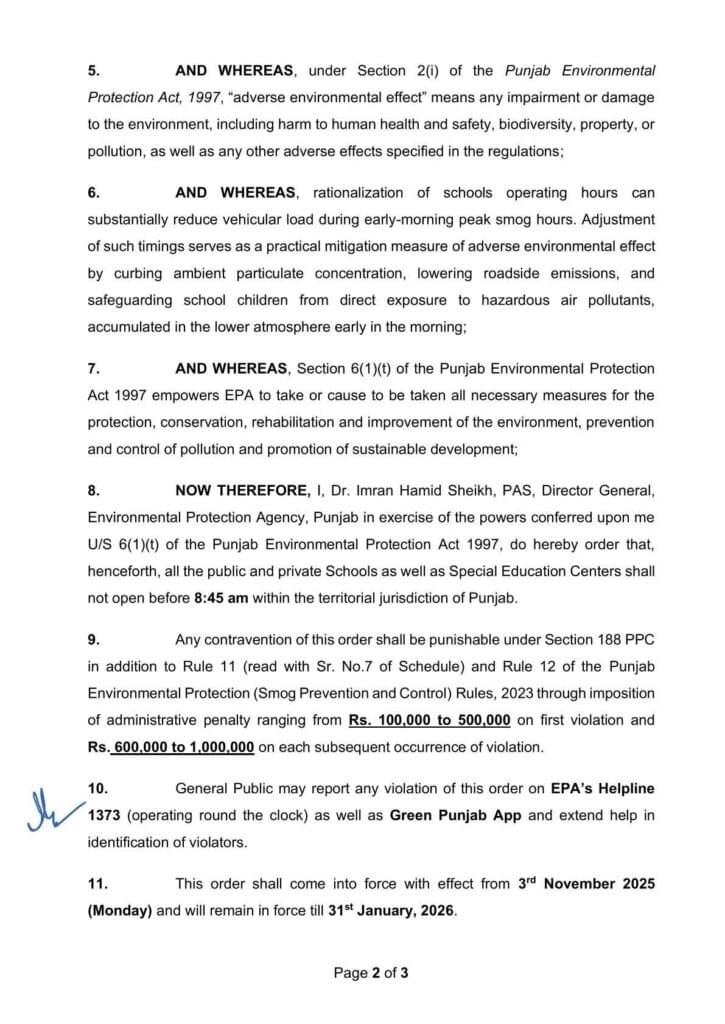
Environment Protection & Climate Change Department (EPA Punjab)
Environment Protection & Climate Change Department (EPA Punjab) has revised school timings due to increasing smog.
All public and private schools must not open before 8:45 AM.
Strict action will be taken for non-compliance.
- First Violation: Fine of Rs. 1 to 5 lakh
- Each Subsequent Violation: Fine of Rs. 6 to 10 lakh
This order is effective from November 3, 2025 to January 31, 2026.

Policy Breakdown: New Timings at a Glance
The rules are straightforward but firm, designed for both urban academies and rural outposts. No school—public, private, or otherwise—cracks the door before 8:45 AM, slashing early commutes that pump extra fumes into the mix. To keep classes humming without overtime, schedules split neatly by shift type. Here’s the official lineup, straight from the EPD’s playbook:
| School Type | Monday–Thursday Timing | Friday Timing |
|---|---|---|
| Single-Shift Schools | 8:45 AM – 1:30 PM | 8:45 AM – 12:30 PM |
| Double-Shift (Morning) | 8:45 AM – 1:30 PM | 8:45 AM – 12:30 PM |
| Double-Shift (Afternoon) | 1:00 PM – 4:00 PM | 2:00 PM – 4:00 PM |
These slots preserve core instructional hours while nudging families toward midday travel, when winds might stir the air a tad. Extras? Ditch outdoor PE, slap on masks indoors if AQI screams danger, and eye indoor purifiers where budgets allow. The order’s province-wide, hitting hotspots like Faisalabad and Gujranwala as hard as the capital, with EPD teams geared for dawn patrols.
The Stick: Fines, Checks, and Teeth in Enforcement
Talk is cheap; compliance isn’t. Shaikh’s laid down the law: first slip-ups snag Rs 500,000, but repeats climb to Rs 1 million, laced with threats of shutdowns or court dates. It’s a hike from milder past penalties, reflecting the crisis’s edge—Lahore’s AQI flirtations with 400 demand no mercy. Enforcement’s no paper tiger: EPD’s syncing with education bosses for random raids, hotlines for tip-offs, and even AI-monitored traffic cams in the mix.
On X, the vibe’s a split: official handles like @EPCCDpunjab blast reminders with links to Dawn reports, while grassroots posts from @TheVeriVision fact-check the fines as “part of Nawaz’s verified plan.” One thread from @royaltvnews ties it to Urdu/English bilingual alerts, urging “clean air for all.” Early Day One reports? Mostly smooth in big cities, with a handful of grumbled delays—but no major fines yet.
Human Side: Wins, Woes, and Stakeholder Echoes
For the folks in the trenches, it’s a double-edged sword. Schools scramble with bus reroutes and teacher swaps; private chains, via associations, call it “health over hassle” but flag squeezed after-hours clubs. Parents? A chorus: working folks cheer the smog-dodging lie-in, but daycare dilemmas loom for late-afternoon pickups. Kids might cheer fewer foggy treks, potentially trimming sick days—studies from similar Delhi tweaks show 10-15% drops in respiratory cases.
Zoom out, and it’s a traffic thaw: lighter AM rushes could shave emissions province-wide, a quiet boon for all. Yet voices from rural edges whisper equity worries—do later starts hit transport-poor families harder? Environmental NGOs applaud but nudge for equity audits, while industry reps eye the ripple: fewer school runs mean broader emission curbs.
The Bigger Picture: Threads in the Anti-Smog Tapestry
This timing twist is one knot in Nawaz’s sprawling net: think electric rickshaw subsidies, cross-border huddles with India (smog doesn’t respect lines), and farm-tech grants to torch less stubble. Critics, though, tag it a patch—urgent, yes, but no fix for root rot like lax emissions laws or urban sprawl. Satellite snaps from NASA paint the scale: Punjab-India smog as a seasonal mega-cloud, demanding regional pacts. On the flip, pilots from Beijing’s odd-even plates hint at scalable wins; Punjab could adapt for school vans.
As November 3 unfolds, compliance clocks are ticking. If fines flow and AQI dips, this could blueprint resilience for smog-sick spots from Delhi to Dhaka. But success? It hinges on buy-in—from principals plotting shifts to farmers eyeing green plows. Punjab’s betting big on delayed dawns for brighter breaths; time, and the wind, will tell if it clears the air.
What are the new school timings in Punjab?
All public and private schools must open at 8:45 AM or later. For single-shift schools, classes run from 8:45 AM to 1:30 PM Monday-Thursday and until 12:30 PM on Fridays. Double-shift schools follow the same morning schedule, with afternoons from 1:00 PM to 4:00 PM (or 2:00 PM to 4:00 PM on Fridays). This adjustment minimizes rush-hour pollution while preserving learning hours.
When does this policy start and end?
It begins today, November 3, 2025, and lasts until January 31, 2026, covering the peak winter smog season when cold air traps pollutants.
Why was this change implemented?
To shield children from dense morning smog, which worsens respiratory issues; Lahore’s AQI hitting 300+ makes early commutes risky, and delaying starts reduces vehicle emissions during high-pollution hours.
What fines apply for violations?
Schools face Rs 500,000 for initial breaches, up to Rs 1 million for repeats, plus possible closures—this is a step up from previous years to ensure adherence.
Does this apply to all schools in Punjab?
Yes, every public and private institution province-wide, from Lahore to rural areas, must comply; no exemptions mentioned in official directives.
How will enforcement work?
The Environment Protection Department will conduct inspections, with hotlines for public reports; AI-monitored systems and spot checks are part of the broader anti-smog strategy.
What other measures are recommended for schools?
Mandate masks, avoid outdoor activities, and use indoor air purifiers if possible—these complement the timing shift for safer environments.
How does this affect parents and students?
It eases morning haze exposure but may disrupt work schedules or after-school plans; early feedback suggests fewer sick days, though some families need adjusted childcare.
Is this part of a larger plan?
Absolutely—it’s tied to Chief Minister Maryam Nawaz’s campaign, including AQI apps, industry shutdowns, and subsidies for clean tech, aiming for collective pollution reduction.
What if air quality improves early?
The policy runs its full term, but officials monitor AQI daily; extensions or lifts would be announced via EPD channels if conditions change significantly.



One Response
Loving the information on this site, you have done great job on the content.